Ten Reasons for Realistic Hope, Part Two
Things Can Get Better—And Soon
This piece originally appeared on Fran Quigley’s blog Housing Is A Human Right on April 10, 2026.
We are in the midst of global upheaval and widespread economic struggle, the latter of which we have discussed many times in this newsletter. But it is important to consider all the reasons that the situation in the U.S. and across the world can get better. We need hope for the brighter future we are working towards.
Last week, we shared the first three of our ten reasons for realistic hope:
1. The billions spent on the Iran war show that we already possess the funds to ensure housing, healthcare, and other basic necessities for all;
2. A new push is on to ensure a subsistence income for our most vulnerable neighbors living with disabilities, and
3. The people of Minnesota’s provided us with inspiring grassroots resistance to Trump’s violent siege on their city.
This week, reasons for hope numbers four and five:
4. Unions Grew Larger and Stronger
In 2025, an increasing number of U.S. workers were represented by a union: 16.5 million workers, the largest number since 2009.
This is important for those workers. As the Economic Policy Institute explains, the numbers prove that union membership reliably leads to a significant increase in wages and benefits, including retirement security and health coverage, especially for Black and Hispanic workers and women.
More union membership and power are good for the rest of us, too. Good union jobs raise the bar in local economies, with overall wages and social benefits increasing in areas with higher union density. And the labor movement is a major force behind the push for healthcare for all, justice for immigrants, and increased minimum wages. We have written here about how many labor unions actively work for tenant rights.
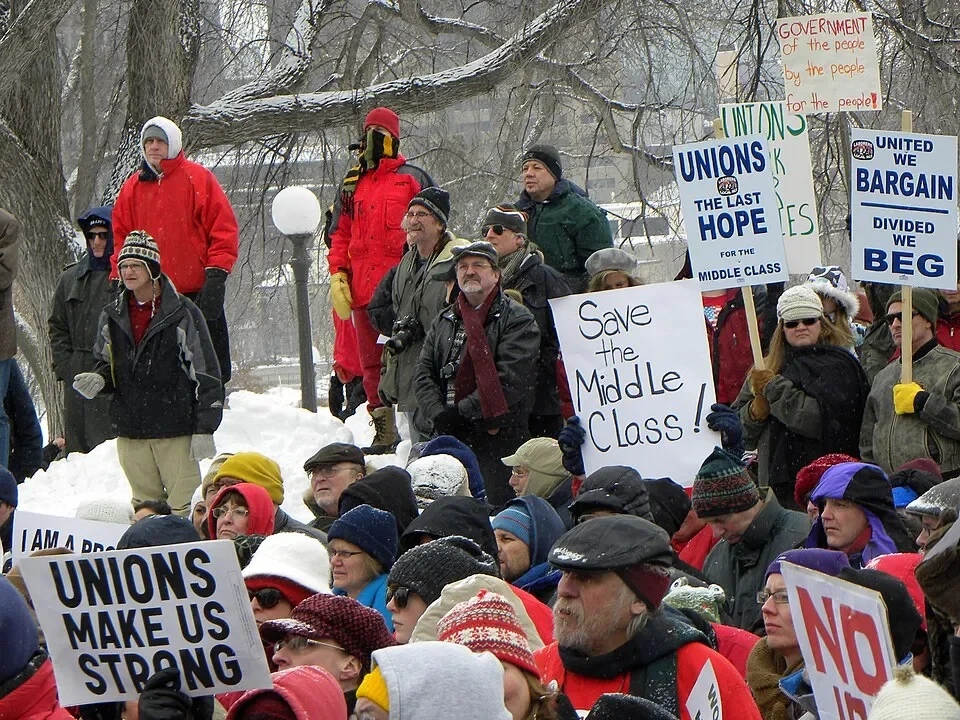
Creative Commons image by Fibonacci Blue
“Trade unions are critical to protecting and promoting human rights, including economic, social, and cultural rights and the right to be free from discrimination,” Amnesty International says. “Unions are the fuel that keeps the fires of social justice and people power burning.”
Winning a union at a workplace is a difficult and significant accomplishment. Current U.S. law is deeply hostile to labor organizing and the current Presidential administration and Congress look to undermine unions at every turn.
So it is no surprise that less than half of U.S. workers who want a union at their workplace have one, and an increased number of workers were forced to go on strike last year. The gains in unionization we are seeing now can and should be much larger. When a new Congress passes the Protecting the Right to Organize (PRO) Act, which would remove many of the barriers to workers forming unions, those gains will come.
5. Tech Can Help Tenants, Too
For tenants and those of us who advocate for them, technology can seem like a tool that works exclusively for the benefit of landlords.
Landlords have used rent-pricing software to collude to charge the highest possible rents, and they access tenant screening reports that often include inaccurate information and lead to refused applications. Landlords routinely use payment and communication portals that can lock our clients out of access.
But tenants can play this tech game as well, reports Sandra Larson in the wonderful publication Shelterforce. In a recent article, “Tech Tools Help Tenants Push Back Against Problematic Landlords,” Larson listed more than a dozen examples of technology that helps tenants protect their rights.
Those include sites like Landlord Mapper and Who Owns What, which help tenants uncover their landlords’ identity. (It is amazing how many layers of different business structures and names some landlords use to hide from accountability.)
And, recognizing the sad reality that most tenants go to court without a lawyer, legal self-help sites like the California-focused Tenant Power Toolkit and Greater Boston Legal Service’s MADE walk a tenant through a response to an eviction or bad housing conditions.
As Larson and those she interviews acknowledge, these tech tools alone won’t solve the huge power imbalance between landlords and tenants. Real protections in the law, aggressive government monitoring of landlords and their performance, and a tenant right to counsel are needed to balance the scales.
But, on the path to that destination, it is heartening to know that many people and organizations are building tools that can benefit millions of struggling U.S. renters.
Next post: More reasons for realistic hope!
