
Ten Reasons for Realistic Hope
Things Can Get Better—And Soon
This piece originally appeared on Fran Quigley’s blog Housing Is A Human Right on April 03, 2026.
In our own communities and across the world, we have much to be deeply concerned about.
There is senseless war, a widespread struggle to afford basic necessities, and federal agents seizing tens of thousands of hardworking, law-abiding neighbors. As this newsletter has recently highlighted, there are cuts in food and healthcare assistance, gaps in access to childcare, and dangerous, unsafe public housing.
We never want to minimize the real suffering going on, particularly the struggles of our eviction court clients. But change only happens when there is a vision for reform and belief that the reform can be achieved. In that spirit, we will share here ten reasons for realistic hope for a better future. This week, the first three:
1. Those War Billions? They Prove Dollars are Available for Housing, Healthcare, and More
Earlier this week, Axios published an article with a remarkable headline: “GOP Weighs Health Care Cuts to Pay for Iran War.”
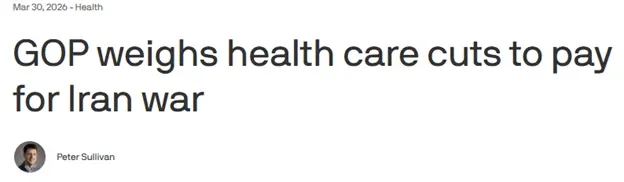
Axios headline from March 30, 2026
With any luck, this is a profoundly self-defeating election-year strategy.
Public opinion polls show that President Trump’s $2 billion/per day war and requested $200 billion to continue it are deeply unpopular. Meanwhile, polls also show that access to healthcare is Americans’ top concern. Democrats quickly called the prospect of cutting healthcare to pay for war “shameful,” hoping that mid-term voters will agree.
But the government cash spigot quickly disgorging billions for death and destruction also highlights a fixable problem: the immoral choices made by every recent U.S. budget. Our truly insane levels of military spending are reliably chronicled by Stephen Semler and featured in our recent posts.
This can change, and with it a wealth of opportunities for a better future. The potential windfall from cutting our war spending is one of the many reasons economists like Rutgers University’s Mark Paul insist the U.S. can readily afford housing, healthcare, and food assistance for all who need it.
Trump’s $200 billion request for the Iran War helped make that case, spurring multiple public discussions about more productive ways to spend that money. For example, The Century Foundation listed 15 things the U.S. could buy with that sum. On the list: restore Affordable Care Act healthcare subsidies for six years, fund childcare for ten million kids, send millions of students to college, cancel all medical debt in the U.S., provide free school lunch for every child, etc.
To which we will add an item of our own as Reason for Hope #2: a boost in a program that would allow millions of people to be safely housed.
2. Progress on “One Neat Trick to Dramatically Reduce Homelessness”
One year ago, we published an article in Common Dreams and this newsletter telling the story of our eviction court client Sarah. Sarah is among the more than 7 million people in the U.S. who is unable to work due to disabilities and trying to survive on Supplemental Security Income, known as SSI. The maximum monthly allotment for SSI is $994 for an individual like Sarah, $1491 for a couple who are both eligible for SSI.
As Sarah and others on SSI can attest, that is nowhere near enough income to pay for rent, food, and other necessities of life. Which is why we see so many people in eviction court—and on the streets—whose sole income is SSI.
“It’s not like these are people who are in some way abusing the system,” Stephen Nuñez, director of stratification economics at the Roosevelt Institute, told CNBC last month. “They’re just living a bare bones, threadbare existence because basically people forgot about them.”
So our article was entitled, “One Neat Trick to Dramatically Reduce Homelessness.”: Raising the SSI benefit level to reflect the cost of survival would allow many unhoused or housing-insecure people to get safely housed.
The recent CNBC report was inspired by the introduction of the Supplemental Security Income Restoration Act by Sen. Elizabeth Warren and 30 other members of the U.S. House and Senate. The bill would raise the SSI rate to 100% of the federal poverty level. It would also allow SSI beneficiaries to keep more savings if they have it, remove marriage penalties, and stop penalizing people on SSI when their friends or family help out.
The Roosevelt Institute has done important work analyzing the proposal and promoting it. Their analysis shows that this long-overdue fix for SSI would cost about $61 billion per year—less than one-third the price of Trump’s Iran War. All but one of the sponsors of the SSI bill are Democrats, showing the prospects for real change if there is a shift in power at the federal level.
But not every change can wait for the next election. So we can look to the north for a wonderful example of how to get things done in a hurry:
3. The People of Minneapolis
One of the bleakest scenes of the winter was the Trump administration sending a horde of masked, violent federal agents to Minneapolis. ICE tear gassed families, arrested pre-school children, and abducted nearly 4,000 people—most of whom had no criminal record at all. The siege was just the latest Trump atrocity that seemed impossible to stop.
The people of Minneapolis thought otherwise.
They sheltered their immigrant neighbors, drove those neighbors’ kids to school, and delivered groceries to families who could not risk leaving their homes. They tracked the ICE agents’ movements and nonviolently but insistently protested their presence and abuses. Two of those protesters—Renee Good and Alex Pretti—sacrificed their lives for the cause.
Organizers called a January 23rd “Day of Truth and Freedom” economic shutdown. Workers stayed home, a thousand local businesses closed for the day, and dozens of clergy were arrested in protest. Then tens of thousands of protestors filled the streets of downtown Minneapolis, all in sub-zero temperatures, chanting their loving slogan, “No hate, no fear, immigrants are welcome here!”
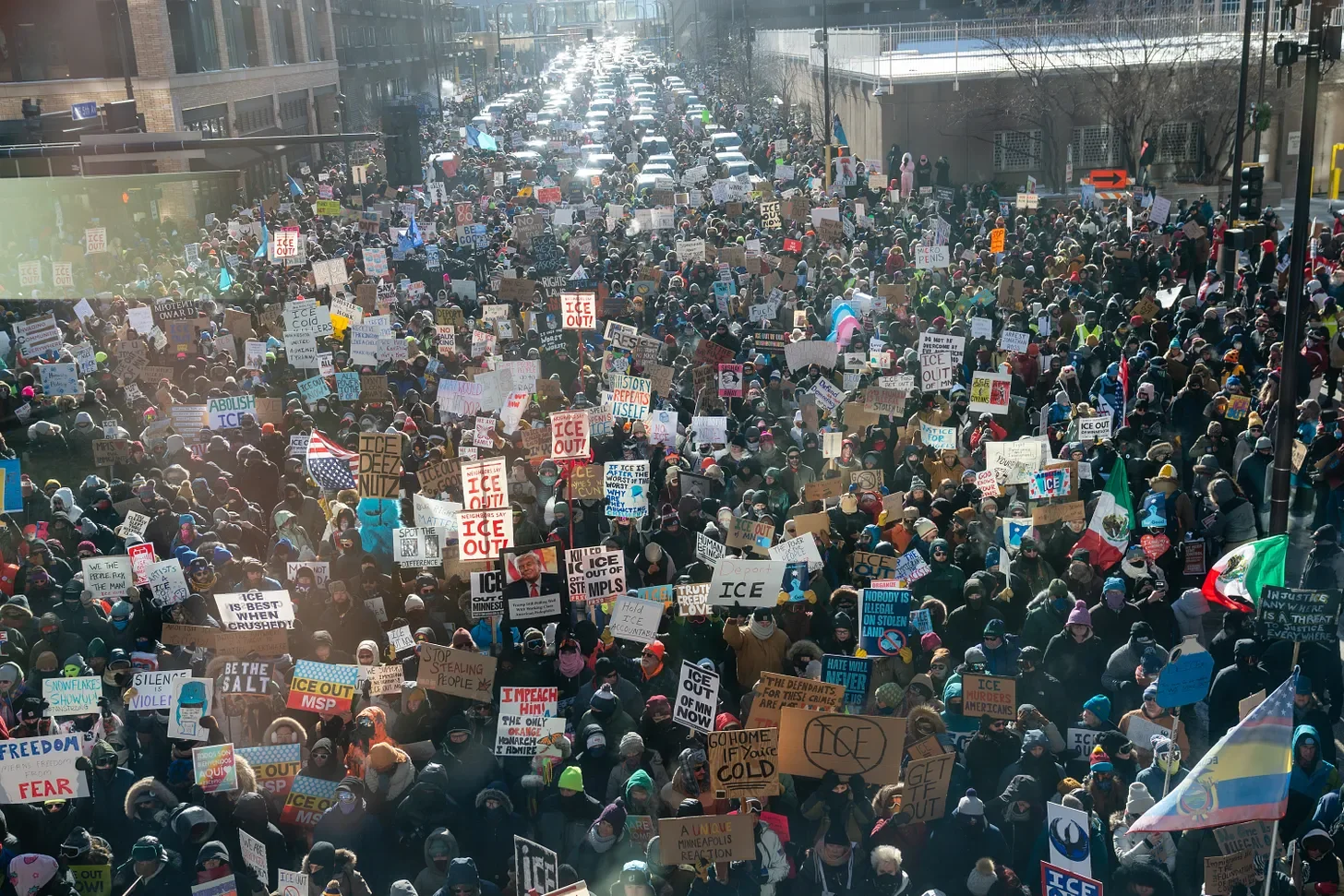
Minneapolis ICE Protest Photo by Lorie Shaull, CC BY 4.0
You probably don’t know the names of the organizers of these actions. This was not a movement led by a single charismatic individual. So it was the people of the Twin Cities of Minneapolis and St. Paul who were collectively honored with a John F. Kennedy Profile in Courage Award and the people of Minneapolis who were nominated for the Nobel Peace Prize.
And it is the people collectively who deserve the credit for Trump cancelling the ICE siege of Minneapolis in early February. This is what a successful movement looks like.
Next post: Three more reasons for realistic hope!
