Ten Reasons for Realistic Hope, Part Four
Things Can Get Better—And Soon
This piece originally appeared on Fran Quigley’s blog Housing Is A Human Right on April 24, 2026.
Things are rough right now. Fragile/fractured ceasefires in the Middle East, millions getting evicted and living in poverty in the U.S., rising prices and stagnant wages. But it is important to reflect on all the reasons that this grim picture can be improved. We need hope for the brighter future we are working towards.
Last week, the previous week, and the week before that, we shared the first seven of ten reasons for realistic hope:
1. The Iran war billions show that we already possess the funds to ensure housing, healthcare, and other basic necessities for all;
2. A new push to ensure a subsistence income for our most vulnerable neighbors living with disabilities;
3. The people of Minnesota’s inspiring grassroots resistance to Trump’s violent siege on their city;
4. Unions are growing larger and stronger;
5. Tech can help tenants, too;
6. Progress in taxing the rich; and
7. Momentum for making the minimum wage a living wage.
This week, as we prepare for a pause in this newsletter, we conclude this series with Reasons Eight, Nine, and Ten, and share an announcement:
8. Universal childcare is gaining traction.
In a recent article entitled Childcare is a Housing Issue, we told the story of our client Monica, the parent of three young children, who we met in eviction court. Part of the reason that children under age five are the most common demographic facing eviction is that young parents are early in their working careers and more often earn low wages. But another reason is that child care is expensive and often difficult to find.
So it is very good news that, as of November 1st, New Mexico became the first state to offer universal child care. – saving their families an estimated $12,000 per year. “New Mexico’s approach is rooted in data, driven by communities, and becoming a model for the nation,” says Neal Halfon, professor of pediatrics, public health and public policy at UCLA.
There is reason to hope Professor Halfon’s prediction that others will follow New Mexico’s lead comes true. New York governor Kathy Hochul and New York City mayor Zohran Mamdani are pushing for universal childcare in their state. Four states and the District of Columbia already offer universal pre-K. The importance of early childhood care and education, plus the proven durability of universal programs, make this trend very promising indeed.
9. A jobs guarantee program would be hugely popular.
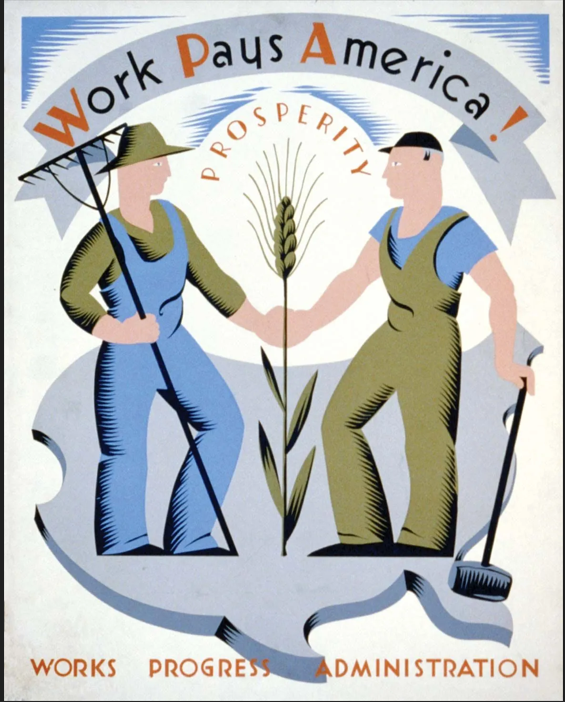
One of the most successful government programs in U.S. history was the collective New Deal work relief efforts of the 1930’s. The Works Progress Administration, Civilian Conservation Corps, the Public Works Administration, and others put millions to work and built a huge amout of our U.S. infrastructure.
Today, available jobs are often low-paid and with tenuous hours, usually achieving little purpose but further enriching billionaires. So would an ambitious government job program being a good idea today as well?
Yes, says the American public, in resounding fashion. Last month, a survey conducted by the firm Verasight and commissioned by the Center for Working Class Politics (CWCP) found overwhelming popular support for a federal jobs guarantee financed by increased taxes on the wealthy.
CWCP researcher Jared Abbott summarized the results in a Jacobin article earlier this month. A majority of Democrats, Independents, and Republicans support a jobs guarantee, as do both working-class and college-educated voters, and people across all income categories.
This should be the center of any progressive candidate’s agenda, Abbott writes:
A major working-class realignment toward the Left will only occur if progressives deliver sweeping economic legislation that gives working-class Americans a concrete, lasting stake in the Democratic coalition — the kind of constituency-building that defined the New Deal era. A federal jobs guarantee is exactly the kind of policy that could anchor that project: universalist in scope, work-centered in design, and broadly popular across the lines of party and class that currently fracture the American electorate.
These survey results and Abbott’s analysis are important in a time when we need to wrest power away from the forces that are punishing the poor and working class. Which brings us to our final reason for optimism:
10. The American people get it.
As much as the U.S. state of affairs has deteriorated in recent years, political power here still lies in the hands of the people, especially in this election year. And the data show that the people of the US are ready to turn this thing around.
President Trump‘s approval ratings have dropped below 40%, with only 31% approving of his handling of the economy. The anti-Trump 2026 No Kings protests drew an estimated 8 million people, among the largest demonstrations in U.S. history.
A majority of Americans want to reduce war spending and raise taxes on the wealthy. They want to address climate change, and ramp up subsidies for housing, healthcare, and other basic needs. The demographics are trending in the right direction, too, with young people more likely to hold progressive views.
It is no small task to translate these widely-held opinions to election victories. It is even harder to move from public opinions to tangible policy changes that will impact the lives of our eviction court clients and others.
But the data show that the will of the U.S. people is compassionate, and their preferred solutions are wise. That is a great foundation from which to build on.
Announcement about this newsletter. Thank you to the 800-plus subscribers to this newsletter, especially those of you who have interacted with the articles, shared them, and/or said kind words about the work. After 129 articles starting in November 2022, we are pressing pause for a bit. We are exploring new approaches to this work, and will be sure to let you know when those plans are ready to launch. We appreciate you all!
