Lawmakers Are Using Red Tape to Choke Off Access to Healthcare and Food
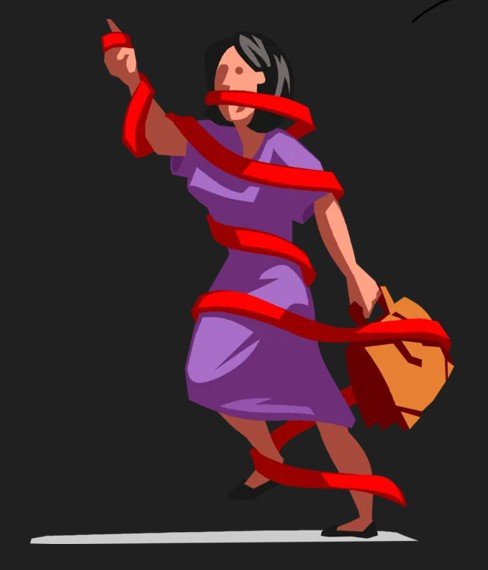
Image by Wannapik
This piece originally appeared on Fran Quigley’s blog Housing Is A Human Right on March 27, 2026.
I live in Indiana, where our state became the most recent to criminalize homelessness, prohibiting people from sleeping or taking long-term shelter on public land. The new law is shameful.
But it is not the worst thing lawmakers did to our clients this year.
Because most of our eviction court clients are the hidden homeless, including children, who are the most common demographic to be evicted from their homes. Most of the hidden homeless are living out of their cars, doubled-up with others, or in motels. They won’t be impacted by the law that criminalizes “public camping.”
But they are definitely struggling. And our lawmakers just made it harder for them to get access to the food and healthcare they need to survive by creating red-tape barriers blocking access to Medicaid and SNAP/Food Stamps.
At the start of every semester, we devote a classroom session to our clinic students engaging in the PlaySpent exercise created for the Urban Ministries of Durham. It is a simulation that mimics the challenge our new students’ soon-to-be clients face every day, The students try—and usually fail—to afford rent, transportation, utilities, childcare, food, healthcare, etc. on a restaurant server or warehouse worker salary.
The saying has it that “the rent eats first.” But not when your children are hungry or the car that you rely on to get to work is broken and needs repair. And not when the heat is shut off in sub-zero weather, or a necessary prescription needs to be filled.
Those costs have to be met immediately. They are survival choices that land our clients behind on rent and hauled into eviction court.
Which makes our housing crisis unavoidably intertwined with our broader affordability crisis, highlighted by the cost of food and healthcare—and, as we discussed in a recent post, child care.
The One Big Beautiful Bill Act passed last July will make the affordability crisis worse, as we noted several times in this newsletter, including here and here.
To recap, the OBBBA signed by President Trump in July, 2025 pays for enormous tax breaks for the wealthy by cutting nearly $1 trillion from Medicaid and $187 billion from SNAP (Supplemental Nutrition Assistance Program aka Food Stamps).
The preferred technique for cutting these costs? Using red tape to choke off access to healthcare and food.
As the Urban Institute and other analysts have explained, the Medicaid cuts will be most deeply felt by young adults, who are disproportionately represented among our clients and others facing eviction.
For people trying to access Medicaid under the Obamacare expansion of coverage, states will now be conducting Medicaid eligibility checks every six months, twice as often as previously required. It is a change that will both cost a lot to administer and will eject eligible people from coverage.
Work-reporting requirements will be ramped up as well, forcing applicants to prove compliance before getting enrolled and then twice a year afterwards.
Work Requirements Trigger Red Tape, Followed by Suffering
As we have written about before, work requirements for social programs may sound like a logical rule, but they have a long and ugly history.
They not only fail to encourage sustained employment, they end up punishing the children and persons living with disabilities who should be exempt from the requirements. The red-tape challenges of proving compliance with work requirements or disability exceptions have proven time and again to push very vulnerable persons off the assistance they need to survive.
Work requirements for Medicaid will definitely do the same. The Center on Budget and Policy Priorities estimates that as many as 15 million people will lose health coverage due to these work requirements.
Importantly, that loss of coverage will happen even though almost all non-disabled adults on Medicaid are currently working. That is because confusing paperwork requirements and nonresponsive government agencies cause applications to be wrongly denied or eligibility revoked.
The negative impact is neither hypothetical nor ancient history. When the state of Arkansas rolled out Medicaid work requirements in 2018, 18,000 people lost coverage in less than a year—and employment was not increased at all. Analysis by Harvard public health researchers showed that more than half of the people who lost Medicaid delayed healthcare, with almost two-thirds delaying taking medications due to cost.
The OBBBA also tightens the work requirement chokehold on SNAP applicants. Previous exemptions for veterans, people experiencing homelessness, and older people between ages 55 and 64 are all being removed.
The OBBBA funded the tax cuts for the wealthy in part by pushing a lot of costs and choices on to states, and states are already making ugly decisions.
Thanks to our friends at Indiana Justice Project for pointing out that, in our state, legislators made the barriers to care even more daunting than the federal law demanded. Indiana applicants now have to prove three months of work requirement compliance to be eligible for Medicaid. They have cruelly banned the use of temporary hardship exemptions such as hospitalizations and natural disasters.
As we learn in the classroom and the courtroom, trying to survive on a poverty income is a zero-sum game. Once our clients are forced to spend more money for food or healthcare, that means less will be available when it comes time to pay the rent. More families and households will be evicted from their homes, and we have both our state and federal lawmakers to blame.
