Public Pharma Can Fix Our Prescription Drug Crisis
A Conversation with the New School's Mara Heneghan.
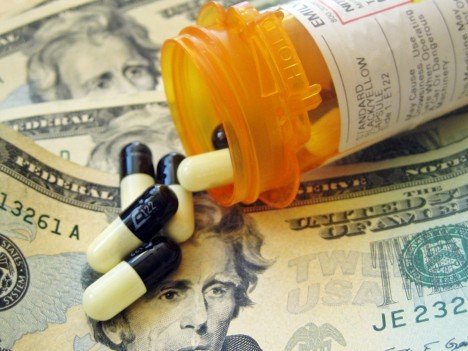
Public domain image by TaxRebate.org.uk
This piece originally appeared on Fran Quigley’s Substack We Can Do Better: Ending Poverty in Our Time on July 9, 2026.
In this week’s episode of We Can Do Better, we talk with Mara Heneghan about something called “Public Pharma.” You may not have heard of Public Pharma before, but it is an approach that can fix our current prescription drug crisis. Mara is director of the Health and Political Economy Project at the New School’s Institute on Race, Power and Political Economy, where she works on health-focused policy and programs.
An unacceptable four in every 10 Americans report skipping prescription doses because they can’t afford their cost, a practice that we know can cost lives. Affording prescription drugs always ranks at the top of Americans’ concerns. For our low-income clients and many with even more resources, this is a very real struggle—despite the enormous government subsidies provided to pharma corporations at every stage of the prescription drug process.
Mara tells us that she and others have been working on a fix: drug manufacturing can and should be treated as essential public infrastructure instead of a platform for price gouging. In fact, it is already being done.
California’s CalRx is a state-backed initiative that produces CalRx-branded insulin pens. The pens are offered at pharmacies for approximately $11 per pen – a fraction of the roughly $80 or more per pen that patients typically pay for brand-name long-acting insulin.
CalRx is working on doing the same for albuterol, a medicine that is a critical need for children with asthma. Michigan and New York are contemplating following California’s lead in public manufacturing of medicines.
The public sector also is starting to leverage its purchasing power to lower drug prices. Not only that, the federal government actually has the right to license patents on critical medicines to generic manufacturers when those medicines are made unaffordable by monopoly-holding corporations. (See an explanation of that “1498”option below.) Our government has done this in the past, and should do so again.
We hope you enjoy this episode.
Here is some additional background about Public Pharma:
Prescription Drug Prices are a Problem–But TrumpRx is Not the Solution, by Victor Roy and Mara Heneghan, March 2026, https://www.usnews.com/opinion/articles/2026-03-26/prescription-drug-prices-trumprx
The New School’s Institute on Race, Power, and the Political Economy, https://racepowerpolicy.org/
Democracy Collaborative, Why We Need a Public Option in Pharma, https://www.democracycollaborative.org/whatwethink/medicine-for-all-the-case-for-a-public-option-in-the-pharmaceutical-industry
Chris Morten,Who’s Afraid of Section 1498?https://scholarship.law.columbia.edu/faculty_scholarship/2810/
