
Budgeting Scolds are Gaslighting Struggling Americans
People Need Living Wages and a Functioning Safety Net, Not Condescending Lectures. Plus, a Lessons From Eviction Court Book Talk on March 26th
This piece originally appeared on Fran Quigley’s blog Housing Is A Human Right on March 20, 2026.
Thanks to Jacobin for publishing my article this week. You can read it below or on their site:
Speaking on a conservative podcast last week, Sen. Jon Husted punched down on low-income people, claiming they cannot handle daily challenges and lack basic budgeting skills
“People living in poverty are just not very experienced at navigating the real world, right?” said Husted, an Ohio senator facing a November election, likely against former Senator Sherrod Brown.
“I remember talking to one young lady who said, ‘Well, I don’t really know how money works at a grocery store,’ because she grew up and has lived all of her adult life using SNAP cards to buy groceries,” Husted continued. “So you literally have to teach people how to budget.”
Husted’s comments triggered pushback from Brown and others. Deservedly so. But his statements reflect a phenomenon that reaches far beyond just one out-of-touch politician. Husted was echoing a condescending slander about poor Americans that permeates the government and even some nonprofit organizations: people endure poverty not because they don’t have enough money, but because they don’t manage their money properly. This myth is often packaged in the guise of a call for “financial literacy.”
The U.S. Department of Treasury has an entire commission devoted to financial literacy. The Congressional Research Services has issued a report claiming that “African American and Hispanic adults, women, lower-income adults, (and) adults with less formal education” all are lacking in financial literacy. (Missing from the report was any acknowledgement of the generations of government racism in housing policy and beyond that has created massive racial wealth gaps.)
The International Federation of Accountants claims that a lack of financial literacy perpetuates poverty. Some nonprofit organizations create four-week training courses to teach homeless families about money management.
I have spent many years working with low-income people, most recently in the law school clinic where we represent tenants facing eviction. I can attest that nearly every client we have is remarkably precise with their budgeting.
They have to be. It is the only way home healthcare workers, food service workers, and persons living with disabilities can survive on incomes far below any reasonable definition of a living wage.
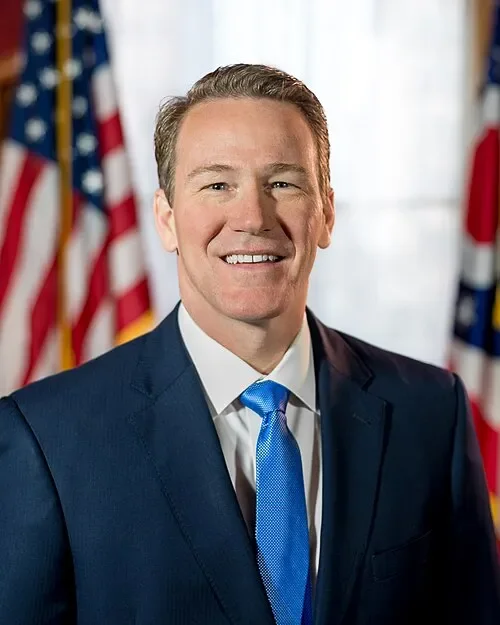
Sen. Jon Husted (R, Ohio). Image from Wikimedia Commons
Poor Outperform the Rich in Financial Choices
Our clients know to the penny what to expect on their utility bills, where to find the cheapest rice, beans, and pasta, and which health clinics are most likely to give out samples of prescription medicines.
While the Treasury Department defines financial literacy as understanding “investment diversification,” our clients are experts on knowing the last day they can pay rent without incurring late fees and which food pantries are within walking distance of the bus line.
(Speaking of food pantries, Husted’s alleged conversation with a SNAP recipient who has never paid cash for food is almost certainly untrue. SNAP benefits come up far short of covering the cost of even low-priced meals, so even maximum-benefit recipients are not exempt from paying for food each month.)
When safety-net benefits are increased or guaranteed income funds are distributed, low-income people reliably use the extra funds to cover basic necessities like housing, food, and healthcare.
U.S. Bureau of Labor Statistics data show that, compared with wealthier households, households receiving means-tested assistance spend a far smaller share of their income on entertainment, alcohol, and tobacco. So it is not surprising that, when safety-net benefits are increased or guaranteed income funds are distributed, low-income people reliably use the extra funds to cover basic necessities like housing, food, and healthcare.
Which leads to an obvious conclusion: it is Senator Husted and others who engage in gaslighting victim-blaming scolding on money management who need tutoring on “navigating the real world.” In Husted’s Ohio and across the country, people deserve living wages and a robust safety net, not condescending lectures.
Lessons From Eviction Court Book Talk
Thanks to everyone who has shown interest in my book, Lessons From Eviction Court: How We Can End Our Housing Crisis. I will be talking about the book at Indiana University McKinney School of Law on Thursday, March 26th at 4:30 PM. All are welcome. Click here for registration details.
