
21st Century Road to Housing Act: Kind of "Mid"
Without Subsidized Housing for Those Facing Eviction and Homelessness, New Law Won't Fix Our Crisis
This piece originally appeared on Fran Quigley’s Substack We Can Do Better: Ending Poverty in Our Time on July 31, 2026
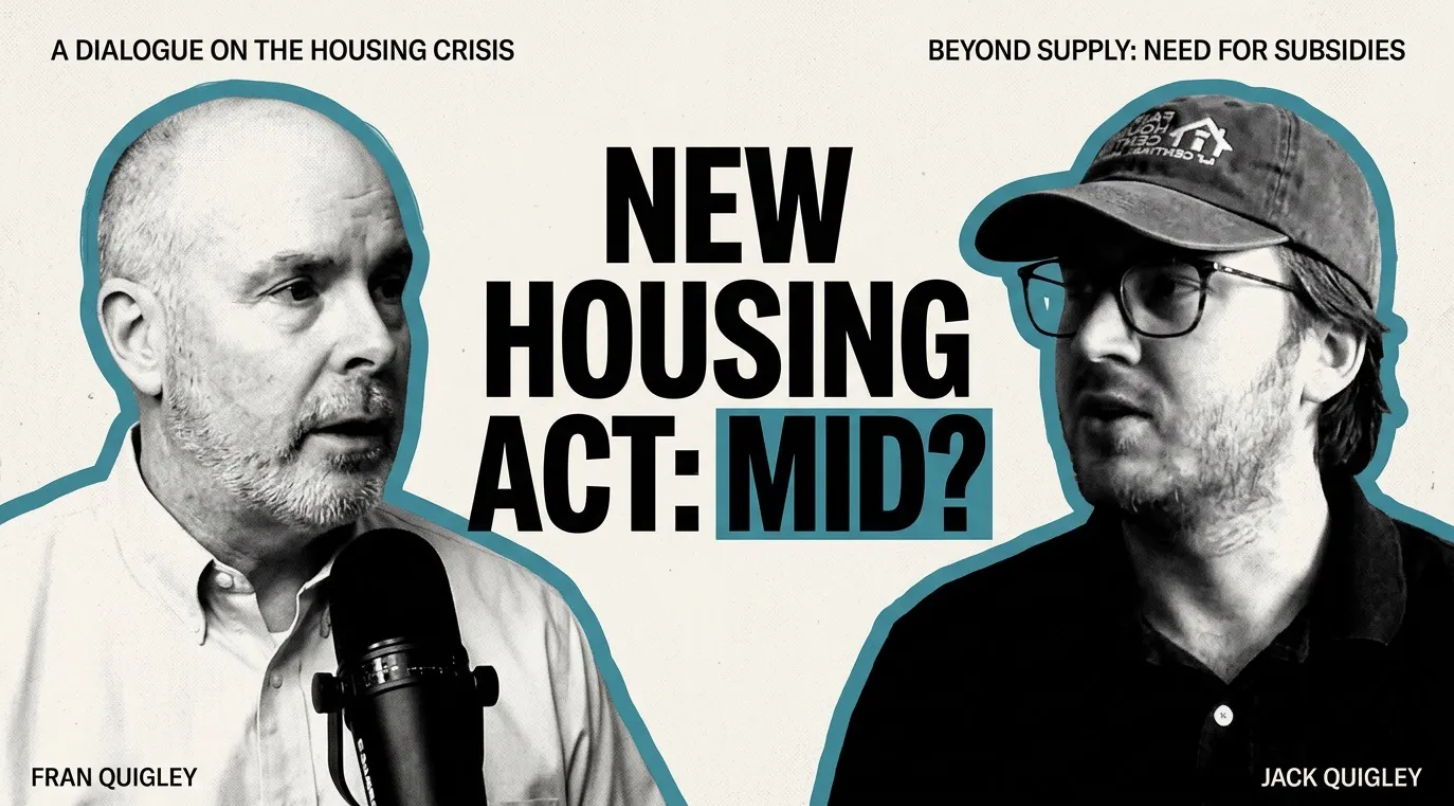
Earlier this month, the 21st Century ROAD to Housing Act became law. It is the first substantial housing bill to pass Congress in decades, and it is . . . mid.
In this episode, producer Jack joins as co-host to talk with Fran about how the new law, like so many other reforms aimed at our housing crisis, focuses on increasing the supply of housing. Specifically, the Road to Housing Act will make it easier to get financing and construct new housing.
Which is fine.
But it won’t do much for the people we see in eviction court, and the millions of others who simply do not make enough money to afford market-rate housing.
(Mid- episode, Gen-Z-er Jack helpfully explains to Boomer Fran that the right description for such legislation is “mid.”)
Our nation’s leading housing experts have been making this point for years. As the title of a 2019 article by Alan Mallach, senior fellow at the Center for Community Progress, pointed out, “Rents Will Only Go So Low, No Matter How Much We Build.”
Not that building more housing is a bad thing: we have an aging housing stock and more supply will lower the price of housing in many areas for some middle-income people. But, as the Center on Budget and Policy Priorities insisted last year, “Our Response to the Housing Crisis Must Include Rental Assistance, Not Just More Supply.”
That is because 7 million households with income below the poverty line are paying more than half their income in rent: their recommended monthly housing cost is just $224 per month. No construction boom will lead to a for-profit landlord agreeing to anything close to that amount.
“The Crisis Will Continue”
As we discussed last week, our clients living with disabilities and thus limited to a Supplemental Security Income check face market rent that is more than 100% of their income. The same barriers are faced by many seniors living on Social Security and some of our low-wage working clients, especially parents with young children.
So we need more and better subsidized housing, especially high-quality public housing and a full supply of housing subsidy vouchers for all who qualify, not just the one in four eligible households who receive it now.
A good detailed guide to the law’s changes is provided by the National Low-Income Housing Coalition here. The National Housing law Project had it right in its official response to the Road to Housing Act passing:
“This is progress but it is no silver bullet. We call on Congress to go further in addressing the housing crisis for poor and working people by making significant financial investments to build new housing, including new public housing, and to pass legislation that will protect and empower tenants. Until there is a whole-of-government approach to save our homes and protect the people who live in them, the crisis will continue.”
So, for our eviction court clients and the millions of others facing the loss of their homes or already homeless, the 21st Century ROAD to Housing Act is kind of mid. We will save our cheers for when real reform, like the Green New Deal for Public Housing Act, becomes law.
You can listen to and/or watch our conversation at our podcast channels on Apple, Spotify, and YouTube. Thank you for reading and listening!
